Two age-specific classes — Dragons (5–7) and Warriors (7–12) — running the same curriculum, taught the way that age actually learns.
Your child will learn to punch, kick, block and fall safely. That's the part they'll tell you about.
The part you'll notice is different: they finish what they start, they lose without falling apart, and somebody finally told them “not yet” in a way that made them work harder instead of quit.
They call because of something else. Usually one of these six.
Following directions the first time is a skill, and it's trainable. It's most of what a beginner class actually is.
Martial arts is a controlled dose of frustration twice a week. That's the whole mechanism — a kid learns they can be frustrated and keep going.
Confidence isn't a personality transplant. It's what happens after a kid does something difficult in front of other people and it goes fine.
We teach avoid, then de-escalate, then defend — in that order. Most of what stops bullying is posture and voice, and both are teachable.
Two hours a week where a phone isn't an option and the thing in front of them is genuinely more interesting.
Soccer, scouts, piano. This is the one parents tell us finally stuck — usually because their kid is known here by name.
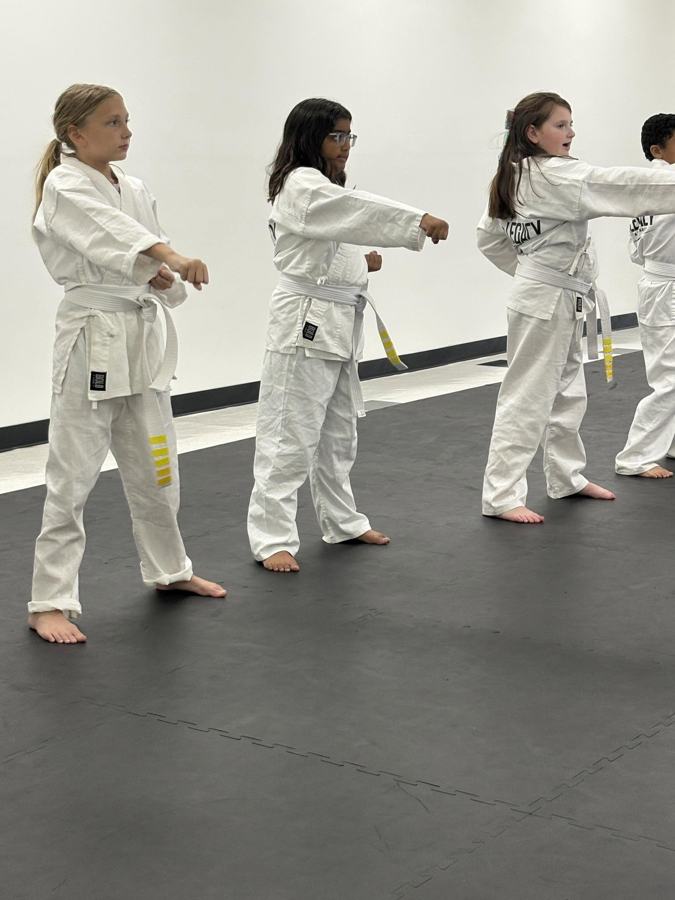
They don't learn the same way, they can't hold attention for the same length of time, and they can't safely drill together. So we don't do it. Kids karate at Legacy runs as two separate classes on the same curriculum — and yes, running two costs more than running one. It's part of why we're not the cheapest school on the Shore.
Where the habit gets built.
Where it gets demanding.
Dragons and Warriors both run this shape — the difference is the length of each block and how hard the work is. Kids do better when they know what's coming.
Shoes off, belt tied, eyes forward. It takes ninety seconds and it draws a line between the day they've had and the class they're about to have.
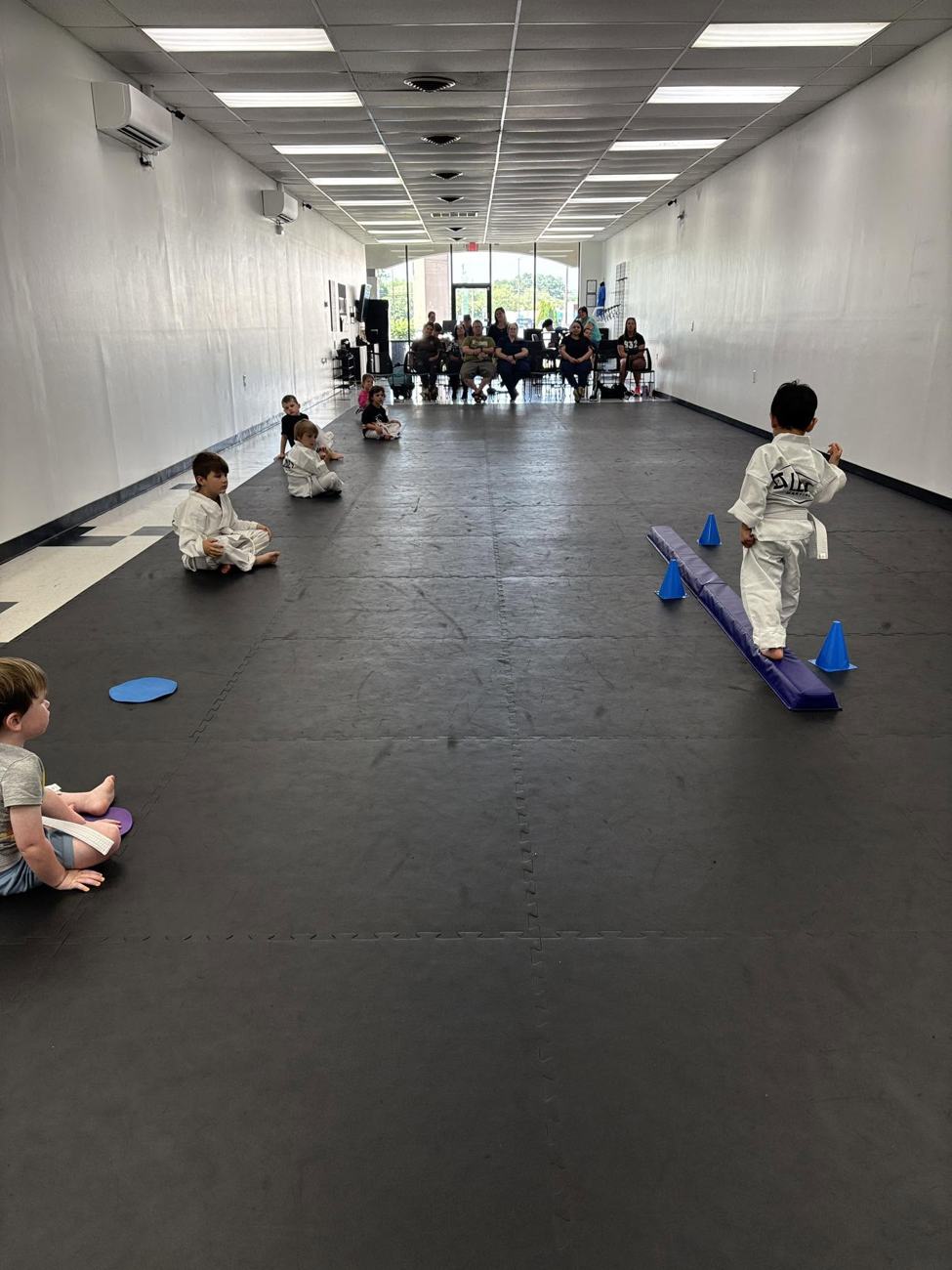
Conditioning, agility ladders, footwork. They're tired enough to focus and awake enough to learn.
Stances, strikes, blocks, forms, pad work, and controlled partner drills. Corrected individually, by name — which is what separate age-group classes are for.
One character theme — respect, perseverance, focus, self-control. Taught in the moment, usually right when a drill got hard.
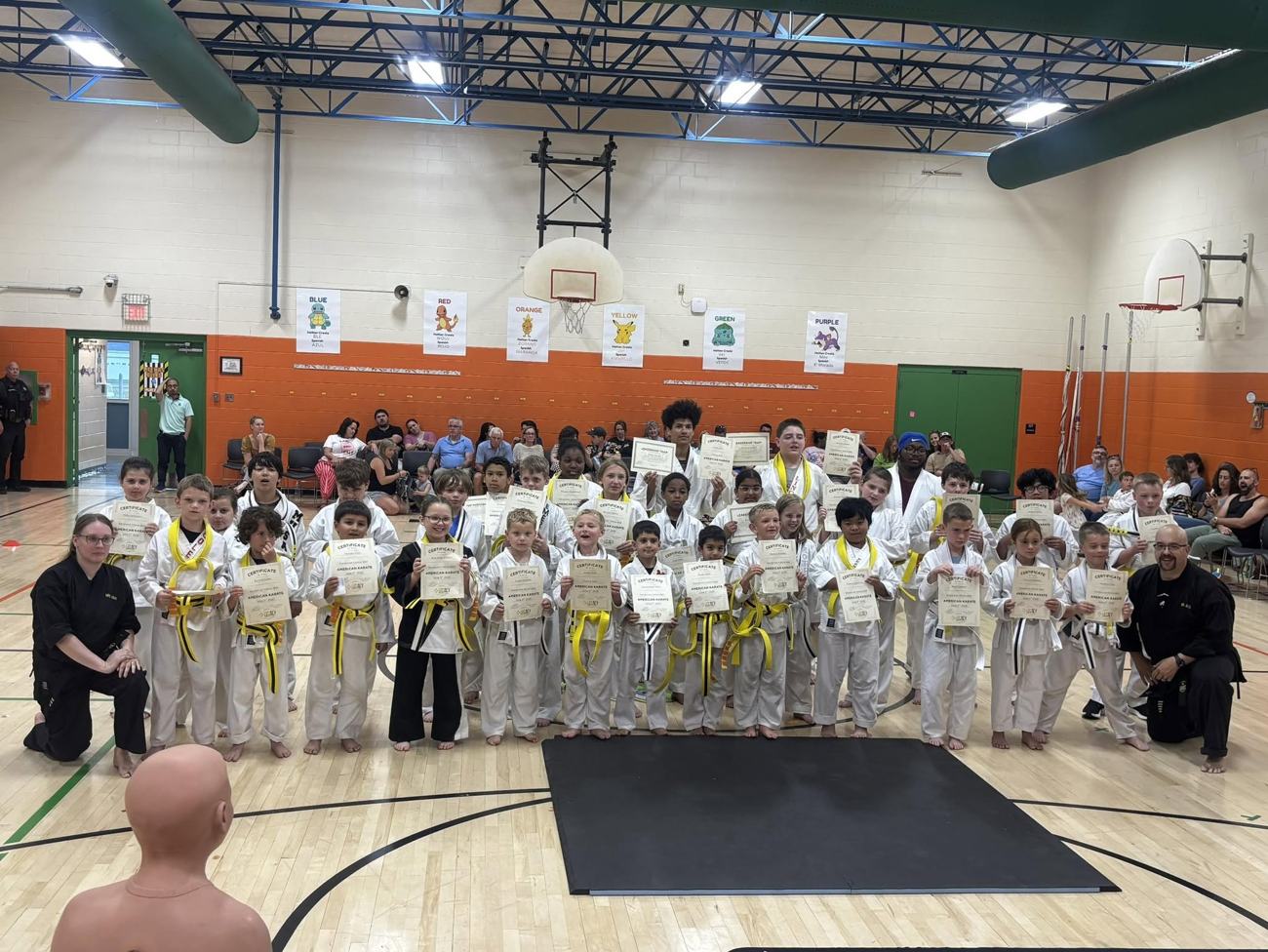
There's a testing cycle, and it's on the calendar. But being enrolled doesn't put your child in it. Some students aren't ready and don't test. Some test and don't pass.
Parents occasionally find that hard the first time it happens. It is also the single most valuable thing that occurs here. A child who has never been told not yet has never had the chance to earn a yes — and the yes is the thing that changes them.
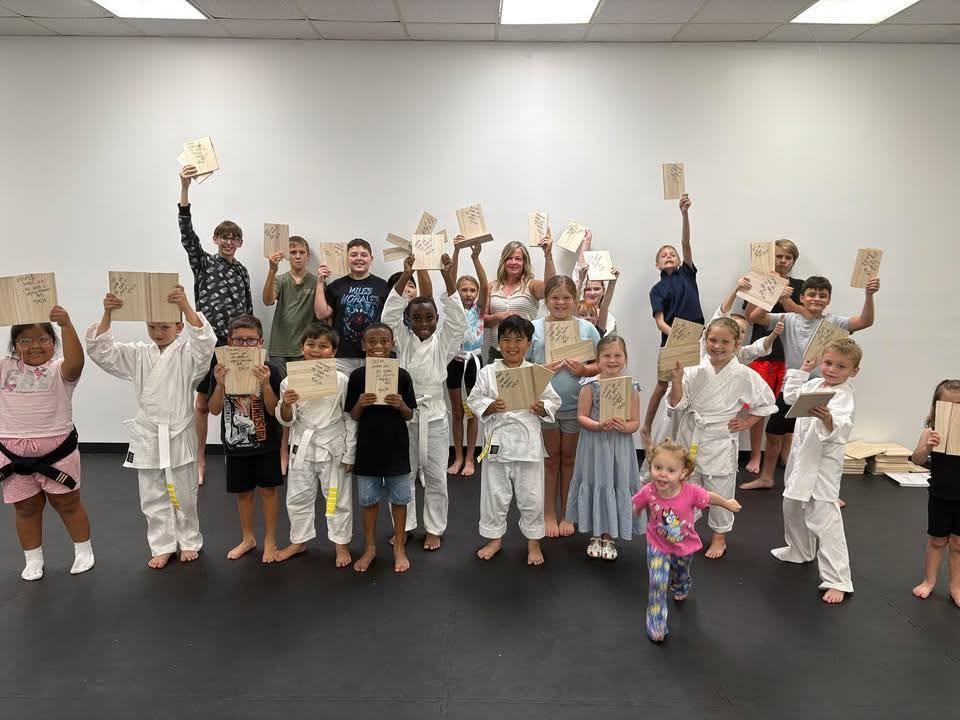
When your child does test, you'll be there, and you'll watch them earn it in front of a room.
We're not going to sell you fear. Most kids never need to use a technique, and a school that leans on scaring parents is telling you what it's like inside.
Here's the order we teach, and we teach it in this order on purpose:
The quiet truth is that most of it never gets to step three. Confident kids get picked on far less, and the confidence comes from the training, not from the technique.
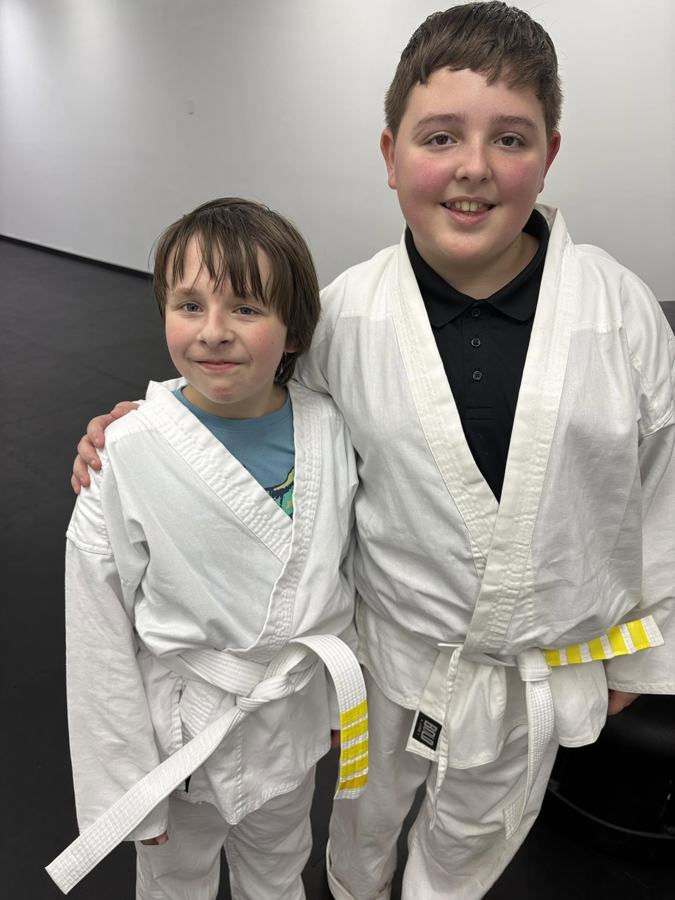
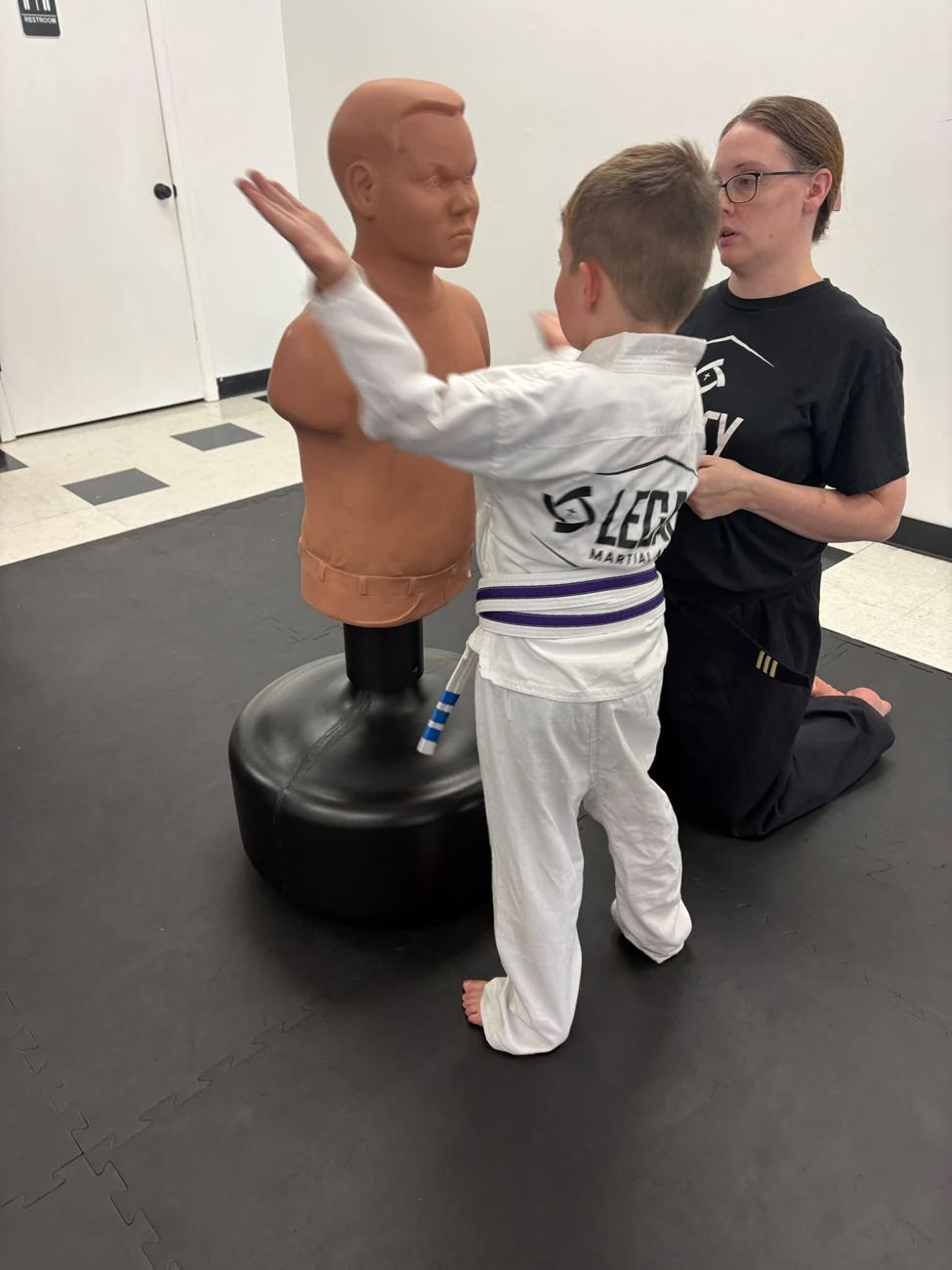
Mrs. Kena's background is in special education, and she specializes in young children and neurodivergent students. Your child trains in the regular class, to the same standard as everyone else — the difference is that the person teaching them has spent a career learning how to reach every kind of kid.
Anxious. Can't sit still. Won't make eye contact. Had a bad experience at another activity and now says they hate all of them. Those are the students we are proudest of, and there are more of them on our floor than you would guess from watching a class.
Tell us when you book so we're ready for them on day one.
Every one of these is public on our Google profile. Notice how few of them mention a belt.
"His confidence has grown, his focus is sharper, and he's developing real skills while having a blast. It's the perfect balance of discipline, fun, and motivation."
— Victoria W. · parent of a 7-year-old"Amazing place for kids to learn discipline, self control, and self confidence. Very encouraging, patient and always make learning fun."
— Jaimini P. · parent"Instructors are caring and patient. We have finally found an activity that my child looks forward to."
— Patricia R. · parent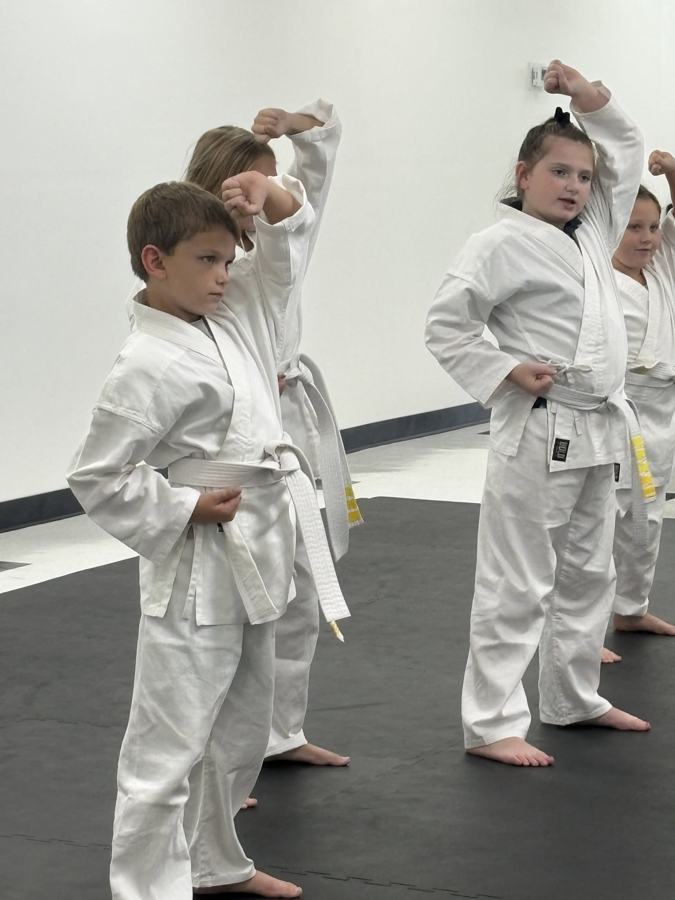
Dragons for 5–7, Warriors for 7–12. Seven fits in both — we'll tell you which one we think your child belongs in, and we'll move them if we got it wrong.
Twice a week is where the change happens. Once a week is a hobby and we'll tell you that honestly rather than take your money for it.
Never. Thirty days' notice and you're free to go, no penalty and no guilt trip.
Come in a t-shirt and shorts. Training is barefoot. Your uniform is sorted once you enroll.
There's a seated viewing area with coffee. We're not a drop-off — we want you seeing what we're working on.
Second and third children cost meaningfully less. If you've got more than one who might train, say so at the orientation.
No enrollment windows and no waiting for a new session. If we're a fit, your child joins the very next class.
We don't publish times online — classes are capped, and we'd rather tell you which class your child actually belongs in and what's genuinely open, than send you a grid that's out of date.
Our kids karate program runs from five to twelve, split into Dragons (5–7) and Warriors (7–12). Children as young as three can start in Tigers, which is built around attention span rather than technique. There is no age at which a child is “too late” to begin — students who start at ten or eleven often progress faster because they absorb correction better.
No. Kids karate at Legacy runs as two separate classes: Dragons for ages 5–7 and Warriors for ages 7–12. They share a curriculum but not a mat time, because those two ages don't hold attention the same way and can't safely drill together.
Running two classes instead of one costs more, and it's one of the reasons we're not the cheapest school in the area. We think it's the difference between a child learning and a child being supervised.
No. Every student started as a white belt with no experience. Classes are structured so beginners learn the fundamentals alongside students who already have them, and your child is taught at their level from the first class rather than dropped into the middle of someone else's curriculum.
Years, and we're not going to give you a number that makes it sound like a purchase. We test every four months and students are only invited when they're ready, so the timeline depends entirely on the child and their attendance. Any school that can tell you the exact date your child will be a black belt is selling you a schedule, not a rank.
The opposite, in our experience. Children who know they can defend themselves have far less to prove, and the entire structure of a class — bowing, waiting, control, permission — is a lesson in restraint. We teach avoid and de-escalate before we teach defend, and using a technique without exhausting those first is treated as a failure.
Talk to us before you make the decision. Most quitting happens at a predictable frustration point, usually right before something clicks, and we can often tell you exactly where they are. If it's genuinely not working, there's no contract holding you — 30 days' notice and no hard feelings.
Your child trains with their own age group, never with the whole school. Dragons (5–7) and Warriors (7–12) run as separate classes on separate mat times, so a five-year-old is never drilling alongside a twelve-year-old.
Sizes differ by time slot. Rather than quote a number, at your orientation we'll tell you exactly how many students are in the class your child would join, and you'll watch that class run.
Free, 45 minutes, no obligation. Your child gets on the mat, you see how we teach, and we work out together whether this is right for your family.